Summons

So for this image I applied the same technique as I’ve been using since the “Tribesman” image: This involves masking selectively, and getting a little texture from the brushes.

This time I added selectively-masked-out washes of solid colour (above). As  I said before, I laboured a little bit over the design of elements. This is because composition for me is sometimes like crawling through the dark. Sculpting objects seems to come naturally to me – the constant correcting of something already laid out, but to arrive at an overall lighting/colour schema all at once seems herculean at times.


Obsessive Preparation

detailwebreliqurender34drawing


I read in James Gurney’s “Imaginative Realism” how he would construct actual models – miniature sets – to aid in lighting and composition. I had done this kind of thing in the past, but part of me always thought it was a little over-indulgent. On his experienced advice I thought I’d give it another shot, but rather than construct something tangible, I modelled and rendered an object digitally. The top image is the (unfinished) project I’m currently working on (of which there’s more to come), and below are the digital rendering and pencil thumbnail. Poignantly enough, this model is what I was working on when I read that H.R.Giger had died from complications resulting from a fall.

Seriously Organic

priestrender3-webpriestrenderwebpriestrender4web

The above model is  the result of using this Haeckl illustration as a “stencil” by way of an alpha to change surface relief.

A PDF of Kunstformen Der Natur can be downloaded from here.

Aerials II

metallic01-2

Much posing and refinement later. The higher the resolution, the more sculpting there is to be done. It rises like a great big tide, sucking up all time (and that’s before texturing and displacement maps).

metallic01-3

Aerials

corbel21-crop

Up until about four years ago, I added to an analogue, hard-copy world by working exclusively with clays, plastics and pigments. Although the benefits of working digitally are obvious to the initiated, sometimes they are tainted by sheer frustration. I lost access to a fair chunk of work last week due to a power source failure. This model is  me trying to hastily slap some things together to reclaim some of this work while its still relatively fresh in my mind. I will be adding to this entry as I progress. I’m coming back in here…

corbel3

Jüghead

Jughead-render-1

Making this model gave me pause for the simple reason that I’d never modelled a heavy-set “endomorph” form before. What I’ve come to realise (and what I probably would have learned very early on if I had ever been classically trained) is that it is not enough to know muscular forms. I used to have this idea that only some vague diagrammatic sense of musculature was necessary, and that some sort of instinct(seriously) would take over- some sort of magic intuition which could hammer out form without the guidance of the cerebral cortex. This is, of course, wishful thinking. What I find myself doing now is 50% mental diagrams muscle relationships (antagonistic, same origins, same insertions etc) and 50% looking in insane places for reference material: in this case, at old-timey wrestlers.

Jughead-render-2Jughead-render-3Jughead-render-4Jughead-Turntable-2

Gator

Alligator---Posed

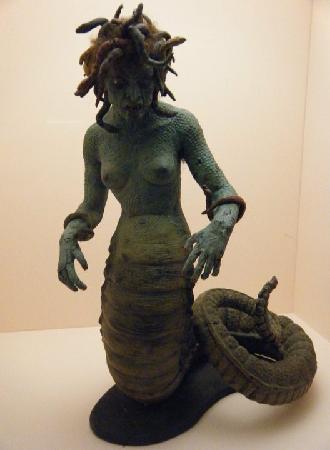
Slowly posing the “Alligator” model. While watching “Clash of the Titans” (1981) last night for the first time in decades I noticed the obvious resemblance. Medusa’s glorious performance under the temple on the “Island of the dead” left me sleepless as a kid.  The torchlight, the acid bath, the hissing, smoking arrows. I stood gawking at Harryhausen’s stop-motion puppet a few years back in the London Film Museum: the Medusa scene was playing on loop on a big screen in a dark room. People tend to look back with rose-tinted glasses, but there’s something to the blending of techniques that lends a scene like that an undeniably eerie verisimilitude.

Alligator-Posed